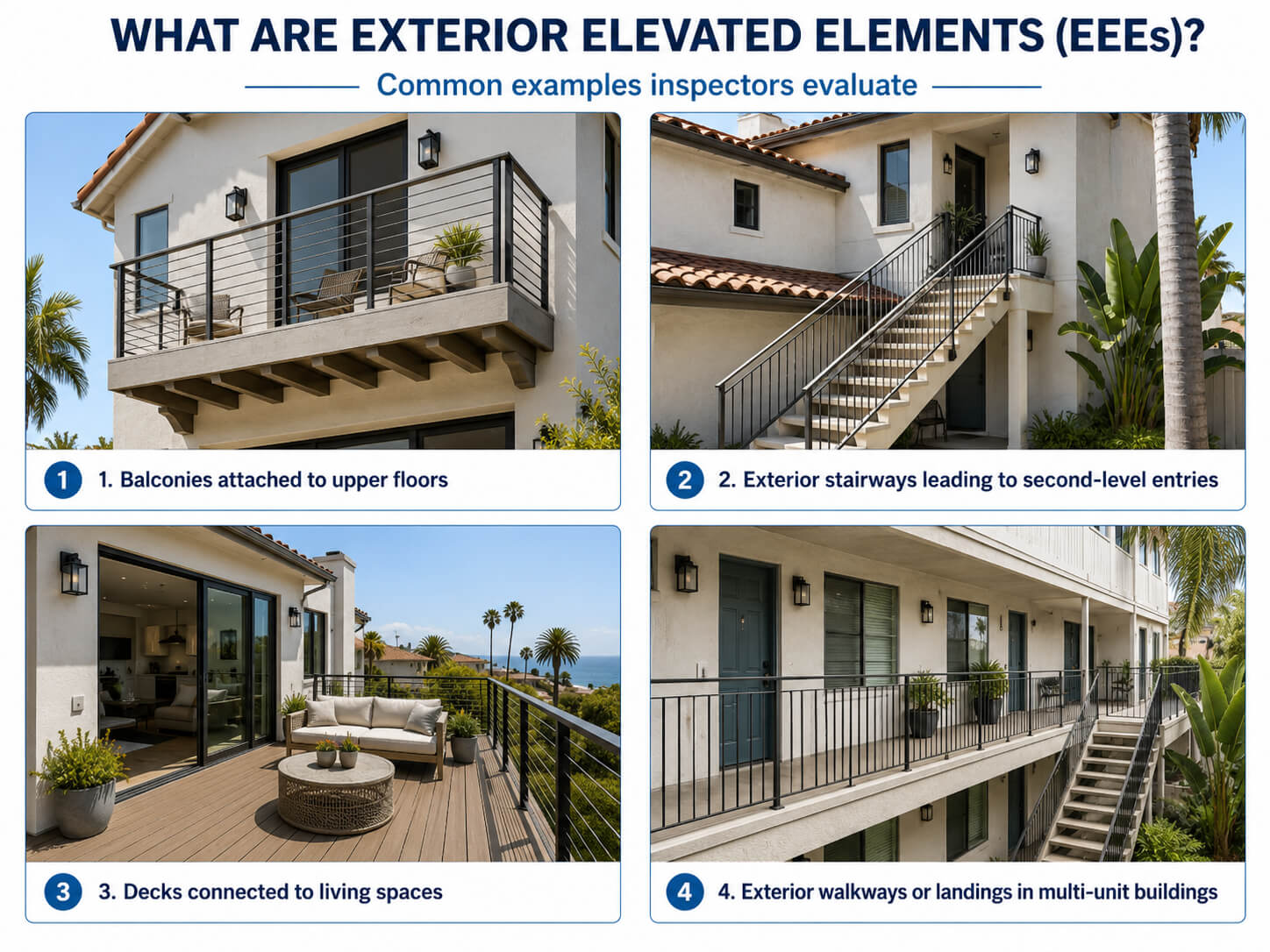
Exterior elevated element (EEE) inspections assess structural components that are located above grade and support persons. Examples of such components in residential structures include balconies, exterior stairways connecting the main entry to second-story entries, decks adjacent to dwelling units, and exterior walkways/landings serving multi-dwelling unit dwellings. As they are subjected to environmental exposure and bear loads, these structural components can deteriorate with time, which may be undetectable until serious structural compromise occurs.
A primary objective of an exterior elevated element inspection is to determine if the inspected component(s) are structurally intact, properly supported, and free of detrimental conditions that may cause collapse.
What Counts as an Exterior Elevated Element
Exterior elevated components are those parts of a building that are situated above grade level and are intended to support individuals.
Examples include:
- Balconies attached to upper floors
- Exterior stairways leading to second-level entries
- Decks connected to living spaces
- Exterior walkways or landings in multi-unit buildings
Often, exterior elevated components utilize wood framing systems or similar construction methods that degrade when moisture is introduced into the system.
Why Exterior Elevated Elements Need Inspection
As exterior elevated components are continuously subject to adverse weather conditions, they are susceptible to degradation. Moisture will seep into cracks, crevices, etc., resulting in damage occurring beneath the surface of the component. Early detection of these types of problems can significantly reduce the risk of creating life threatening hazards.
Smaller items such as cracked caulk, improper flashing, inadequate drainage, etc. can create pathways allowing moisture into structural elements. This can result in premature wood decay, corrosion, and structural weakening.
Preventative measures in the form of regular inspections assist in identifying potential problems prior to them becoming hazardous conditions.
California law describes the purpose of these inspections as determining whether exterior elevated elements and their waterproofing systems are in “a generally safe condition, adequate working order, and free from any hazardous condition caused by fungus, deterioration, decay, or improper alteration.”
What an Exterior Elevated Element Inspection Looks For
When performing an exterior elevated element inspection, the examiner visually examines each component and inspects for visual evidence of deterioration or damage.
Important aspects to examine include:
- Attachment points where the element connects to the building
- Visible framing and support components
- Walking surfaces and protective coatings
- Guardrails and handrails
- Signs of water intrusion or material decay
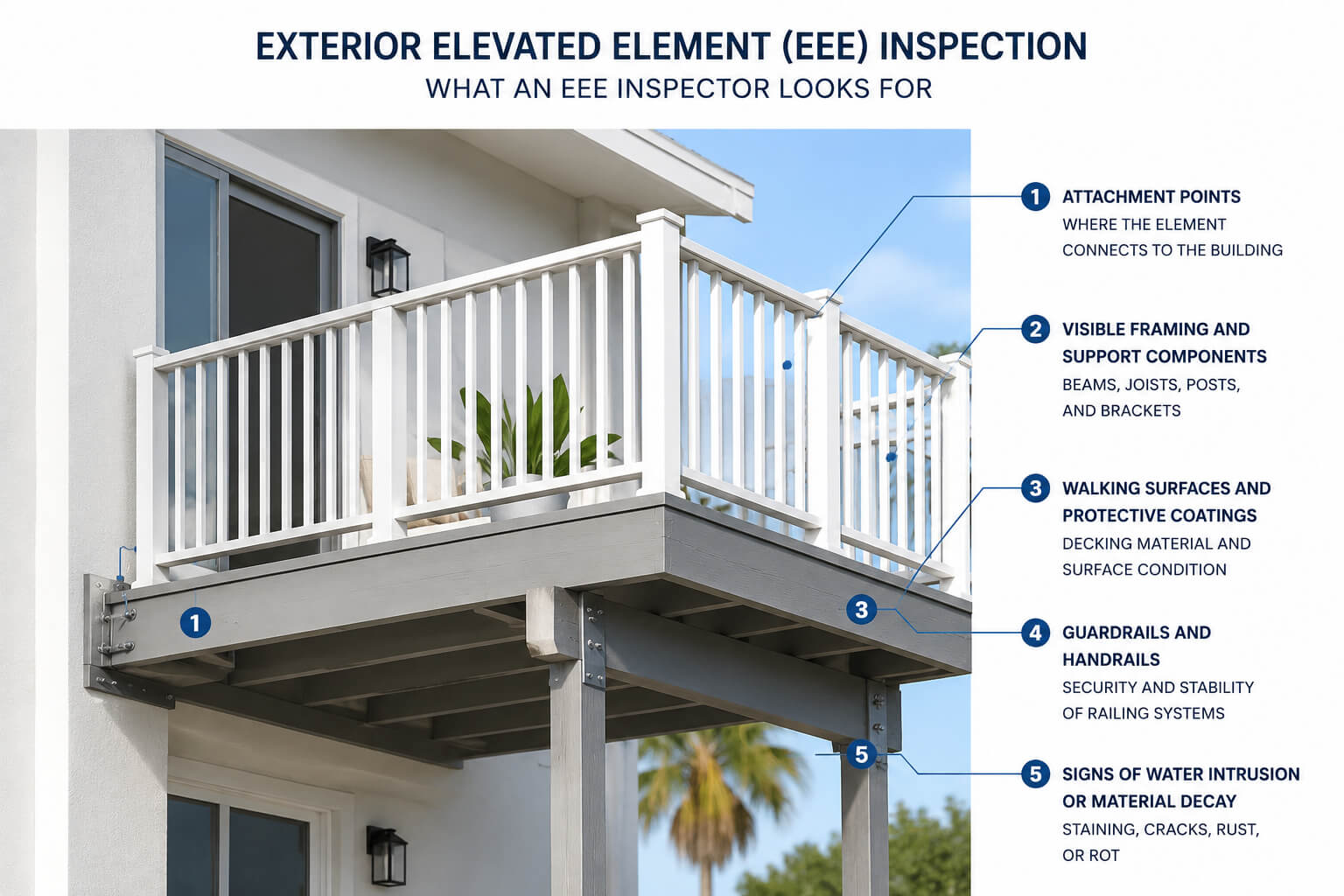
Visible deficiencies documented by inspectors are accompanied by a determination regarding the apparent stability of the affected component(s).
California Laws That Require EEE Inspections
California enacted two bills addressing the examination requirements of exterior elevated components in specified residential building configurations.
SB 721 applies to many multi-family apartment buildings.
SB 326 applies to condominium associations.
Each bill mandates periodic examinations of raised balconies and other elevated elements built using wood framing systems or similar materials. The intent of both bills is to facilitate early identification of potential safety hazards, thereby reducing the likelihood of catastrophic failure of the examined structures.
While these bills pertain to most forms of multifamily housing, there is no legal requirement for single-family home owners to perform this type of examination unless a raised structure exists.
Signs an Exterior Elevated Element Should Be Inspected
Even though a mandatory examination is not mandated, specific conditions warrant a close examination.
Warning signs indicating that a raised structure requires examination include:
- Soft or spongy areas when walking on a balcony or deck
- Visible cracking or separation at connection points
- Rusted fasteners or metal brackets
- Loose guardrails
- Water staining near structural joints
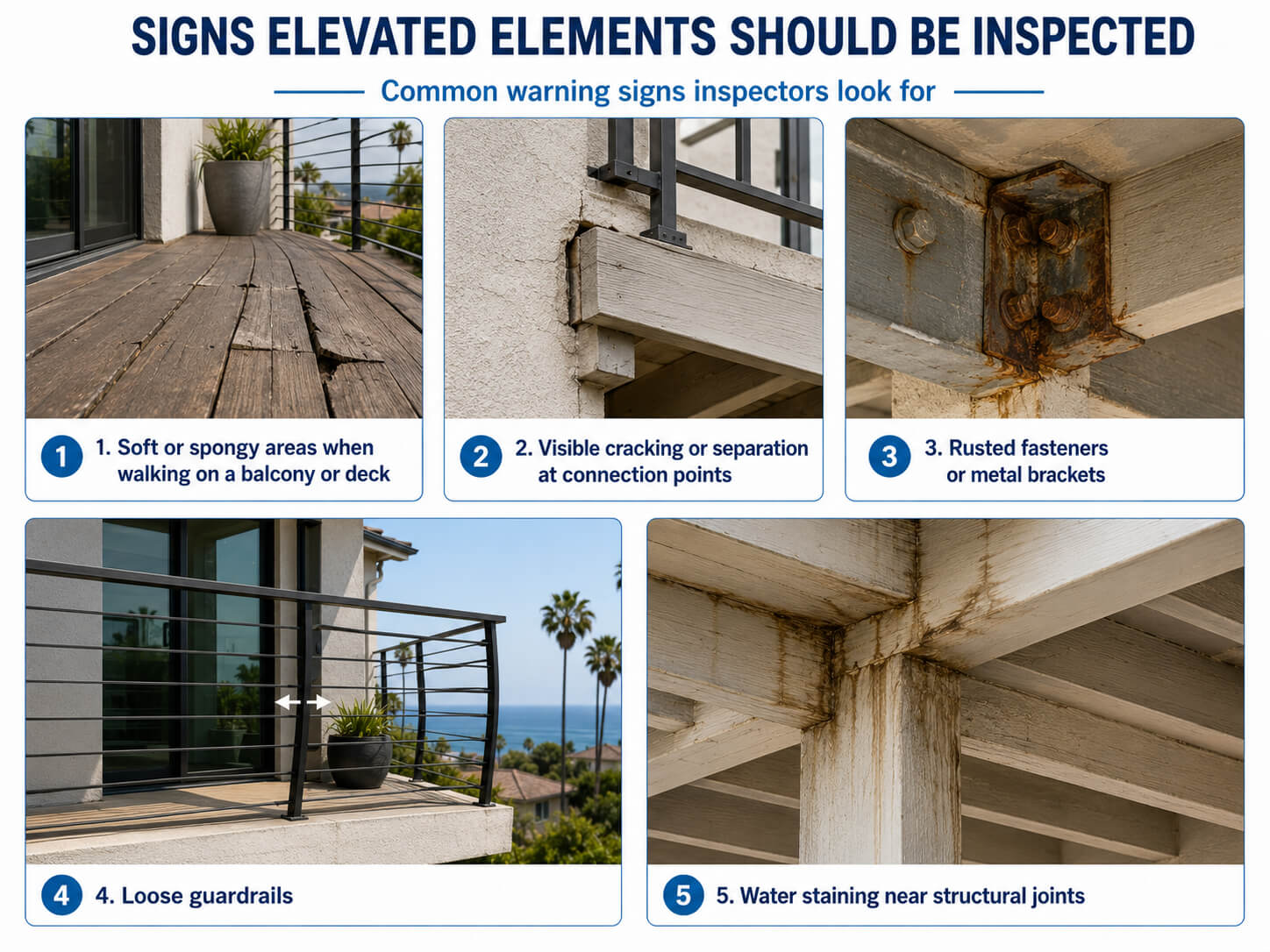
While these symptoms do not necessarily indicate that a raised structure is unstable, in our professional opinion, they definitely represent sufficient justification to investigate further.
How Exterior Elevated Element Inspections Help Buyers and Owners
Performing an exterior elevated element inspection provides buyers with knowledge about potentially concealed structural damage that would likely go unnoticed upon conducting a casual walk-through of the premises.
Homeowners and/or property management companies receive documentation of their raised structures’ condition and can initiate necessary maintenance prior to the development of potentially costly repairs.
At Stellar Property Inspections, our view is that exterior elevated elements should never be treated as “minor” building features. A failing balcony, deck, stairway, or walkway can create serious safety concerns, and many of the conditions that lead to failure start quietly. That is why we look closely at the details that are easy to overlook: water entry points, attachment areas, support components, guardrail movement, and signs that the structure is no longer performing as intended.
Exterior Elevated Element Inspections at Stellar Property Inspections
At Stellar Property Inspections LLC, we offer Exterior Elevated Element Inspections, including balconies, stairways, and walkways. We evaluate the overall condition of elevated exterior elements for signs of water damage, wear, or deterioration.
Whether you own or manage properties with raised exterior structures, our inspection services will provide greater insight into the condition of said structures and enable you to prepare for future repair or maintenance costs before they become unmanageable.